




Battery & ESS
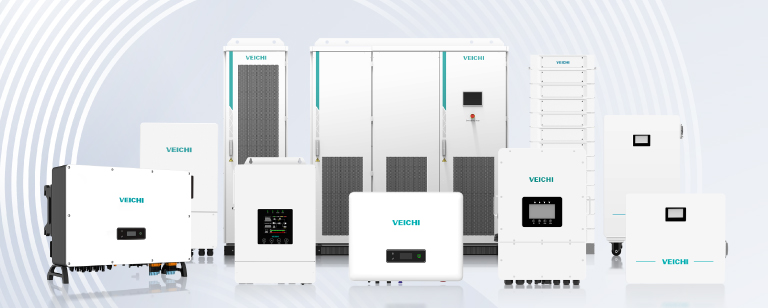
VEICHI designs and builds its lithium battery energy storage systems in-house, from the LiFePO4 cells and battery management system to the hybrid inverters and monitoring platform, so the battery and the inverter are validated as a matched pair rather than assembled on site.
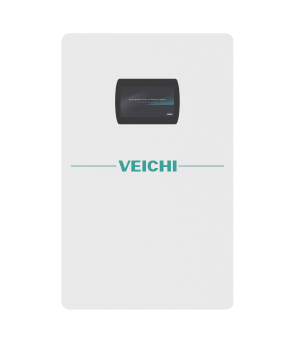
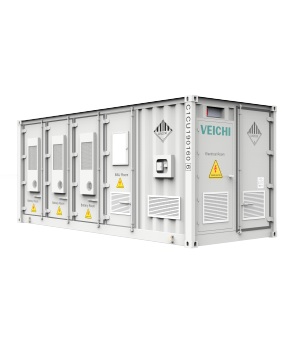
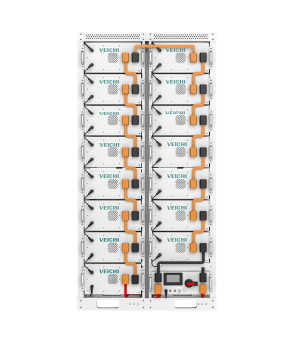
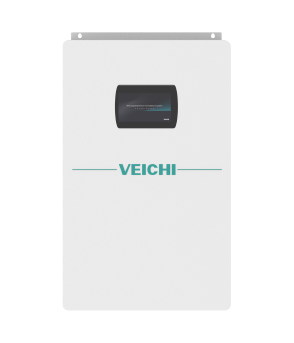
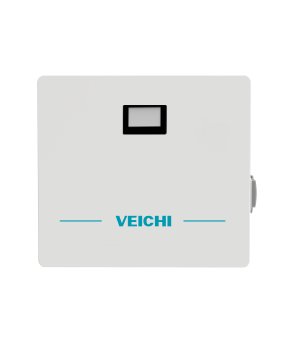
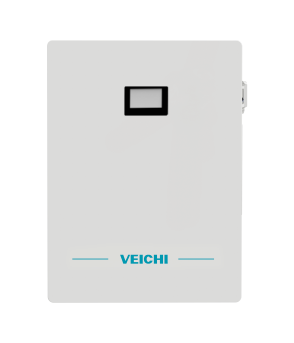
The range is organised by system voltage, because that is what your inverter decides first. The low-voltage VCLB family runs at 51.2 V, from a single 5.12 kWh pack to about 241 kWh with 15 packs in parallel, in IP65 or IP20 enclosures. The high-voltage VCHB-241K-314 stacks modules to 153.6–768 V DC, delivering 48–241 kWh per cluster and roughly 3.6 MWh in parallel. Above that, the containerised 1.2 MWh power station delivers 500 kW for utility-scale sites.
Every pack uses LiFePO4 rated for 6,000–8,000+ cycles at up to 95 % depth of discharge, with multi-layer BMS protection and aerosol fire suppression that responds within seconds.
More About Battery & ESS
What Is a Battery Energy Storage System?
A battery energy storage system (BESS) stores electricity as chemical energy and releases it back as AC power when you need it. In a solar installation it captures surplus PV generation during the day and discharges it at night, during a grid outage, or at the moment your load peaks.
A complete VEICHI system is built from four layers:
- Battery modules – LiFePO4 cells assembled into modules and then into packs, strings or clusters.
- BMS (battery management system) – balances cells, tracks state of charge and state of health, and disconnects the pack within milliseconds if voltage, current or temperature leaves the safe envelope.
- Hybrid inverter or PCS – converts DC battery power to AC for the loads, and manages charging from PV or grid. VEICHI builds these in-house, so battery and inverter are validated as a pair rather than as two separate purchases. See our hybrid inverters.
- EMS and monitoring – schedules when to charge and discharge, and reports performance remotely.
Because VEICHI develops the cells, the BMS, the power electronics and the cloud platform together, one partner carries responsibility for the whole chain instead of each component pointing at another supplier.
The VEICHI Battery ESS Range at a Glance
The portfolio is organised by system voltage, because that is what your inverter decides first:
- LV lithium battery – VCLB-5K-W01, VCLB-5K/16K-W02, VCLB-5K/16K-E01, VCLB-10K-W01. 51.2 V nominal, from 5.12 kWh per pack up to about 241 kWh with 15 packs in parallel. Best fit: homes, small shops, off-grid cabins and lead-acid retrofits.
- HV lithium battery – VCHB-241K-314. 153.6 V to 768 V DC, 48 to 241 kWh per cluster and up to about 3.6 MWh in parallel. Best fit: factories, campuses, industrial peak shaving and micro-grids.
- Containerised power station – 1.2 MWh Energy Storage Power Station with integrated PV, storage and charging, 1.2 MWh at 500 kW maximum output. Best fit: utility-scale plants and PV-storage-charging hubs.
Residential and small commercial projects normally start with the LV family. Three-phase sites above roughly 30 kW move to HV. Anything container-scaled moves to the power station platform. Residential systems and C and I systems are documented separately.
Why LiFePO4? Comparing Storage Chemistries
Every VEICHI battery uses lithium iron phosphate (LiFePO4 or LFP). It is not the most energy-dense lithium chemistry available, and that is a deliberate trade:
- Lead-acid (AGM, GEL, flooded) – 300 to 800 cycles, about 50% usable depth of discharge, low energy density, needs watering, equalisation and ventilation, takes 3 to 4 times the floor space per usable kWh, and costs the most over ten years once replacements are counted.
- LiFePO4 – 6,000 to 8,000+ cycles, 90 to 95% usable depth of discharge, medium energy density, excellent thermal stability that resists thermal runaway, no maintenance, and the lowest cost per usable kWh over ten years.
- NMC – 1,000 to 3,000 cycles, 80 to 90% usable depth of discharge, the highest energy density, lower thermal stability that needs tighter control, no maintenance, and a higher lifetime cost.
NMC wins on raw density, which is why it dominates electric vehicles. For stationary storage the deciding factors are cycle life, safety and cycle cost, and on all three LiFePO4 wins. This is also why LiFePO4 banks need roughly a quarter of the floor space of an equivalent lead-acid bank delivering the same usable energy.
How Much Battery Capacity Do You Need?
Sizing has two halves, and mixing them up is the most common reason a system disappoints.
Step 1 – size the energy (kWh) from what you want to power and for how long:
- List the loads the battery must carry, in kW.
- Multiply by the hours of autonomy you need.
- Divide by the usable depth of discharge – 0.9 to 0.95 for VEICHI LiFePO4.
Example: a home needs 3 kW of critical load for 4 hours. That is 12 kWh of usable energy, so the battery needs about 12 / 0.95 = 12.6 kWh of nameplate capacity. Three VCLB-5K-W02 packs (15.36 kWh) or one VCLB-16K-W02 (16.07 kWh) both clear that.
Step 2 – size the power (kW) from your peak simultaneous load, because capacity alone does not tell you how fast energy can leave the bank:
- A 100 A VEICHI pack at 51.2 V supports roughly 5 kW.
- A 200 A VEICHI pack supports roughly 10 kW.
- A full VCHB-241K-314 cluster at 0.5C supports about 120 kW.
A battery with plenty of kWh but too little discharge current will trip on the first motor start. Always check both numbers against the datasheet, then add growth headroom – VEICHI packs and clusters can be expanded later without rewiring the original bank.
Low Voltage or High Voltage?
The short version: an LV battery keeps every pack at 51.2 V and adds packs in parallel, so capacity grows and voltage stays fixed. An HV battery stacks modules in series, so voltage grows while amp-hours stay fixed, and clusters are then paralleled for more energy. Almost every other difference – cable size, efficiency, where it can be installed and who may install it – follows from that one structural choice.
Choose LV when the site is below roughly 30 kWh, runs on a single-phase inverter, replaces an existing 48 V lead-acid bank, or needs an outdoor IP65 enclosure. Choose HV when the site is above roughly 100 kWh, has three-phase loads of 30 kW or more, or when the array sits far enough from the inverter that cable losses start to matter.
Both families are covered in detail on their own pages, including full comparison tables and model-by-model selection steps: LV lithium batteries and HV lithium batteries.
Where VEICHI Battery Systems Are Used
- Residential self-consumption – stores daytime PV and runs the house after sunset: LV VCLB packs with a single-phase hybrid inverter.
- Home and small business backup – carries critical loads through an outage: LV VCLB packs on a hybrid inverter with UPS transfer.
- Off-grid and remote sites – provides the only source of power at night: LV packs with an off-grid inverter.
- Telecom, security and monitoring – keeps low-power equipment running 24/7: small LV packs, IP65 where the enclosure is exposed.
- C and I peak shaving – shaves demand peaks to cut capacity charges: HV VCHB-241K-314 with a three-phase hybrid inverter or PCS.
- Micro-grids and islanded sites – stabilises local generation and load: HV clusters or micro-grid hybrid inverters.
- Large PV-storage-charging plants – time-shifts utility-scale generation: the 1.2 MWh containerised power station.
What to Check Before You Buy
1. Inverter compatibility first. Read the inverter datasheet for its permitted DC battery voltage window and communication protocol, then pick the battery that fits inside it. A high-voltage string cannot be connected to a 48 V inverter, and no amount of capacity fixes a mismatch.
2. Get cycle life stated with its test conditions. Temperature, charge rate and depth of discharge all move the number. Ask for years of warranty, guaranteed retained capacity at the end of those years, and the conditions behind the cycle rating – together, in writing.
3. Check how it grows. VEICHI LV packs expand in parallel up to about 241 kWh and HV clusters parallel to about 3.6 MWh. Confirm the maximum before you commit, and confirm that adding capacity later does not require replacing what you already own.
4. Match the enclosure to the location. IP20 models belong indoors in a cabinet or plant room; IP65 models handle outdoor and semi-outdoor installs. Higher ingress protection removes a whole class of siting problems.
5. Look at the safety systems, not just the certificate list. VEICHI packs combine multi-layer BMS protection with aerosol fire suppression that detects and extinguishes a cell event within seconds, and the 1.2 MWh platform adds IP55 and container-level suppression.
6. Plan for monitoring. Systems that report remotely get problems found early. VEICHI supports CANBUS, Modbus RTU and TCP/IP for connection to an EMS or third-party platform.
Frequently Asked Questions About Battery Energy Storage Systems
What is the difference between a lithium battery and a battery energy storage system?
The battery is the component that stores energy. A BESS is the complete working system: battery modules, BMS, inverter or PCS, protection and controls, all engineered to operate together.
How long does a battery energy storage system last?
VEICHI LiFePO4 systems are rated from 6,000 to over 8,000 cycles depending on model, which typically corresponds to a 10-year design life in daily-cycling duty. Actual life depends most on how deep you discharge and how hot the room runs.
Can I add more battery capacity later?
Yes. LV systems grow by adding packs in parallel and HV systems by adding clusters in parallel, both without replacing the existing hardware. Size the initial installation with some headroom and plan the cabling for it.
Do VEICHI batteries work with other brands of inverter?
They are validated against VEICHI hybrid and off-grid inverters, and communicate over CANBUS, Modbus RTU and TCP/IP so they can be integrated with many third-party systems. Always confirm the specific combination with us before commissioning.
What maintenance is required?
Effectively none compared with lead-acid: no watering and no equalisation charging. Keep the enclosure ventilated and inside its specified temperature range, check terminal torque periodically, and review state-of-health trends through the monitoring platform.
Can the system run during a power cut?
Yes, when paired with a hybrid inverter that supports backup or UPS output. Note that these systems are primarily designed to store solar energy rather than to act as a grid-forming backup power source, so confirm the backup rating and transfer time with your supplier.
LV or HV – which should I choose?
Under about 30 kWh or on a single-phase inverter, LV. Above roughly 100 kWh or with three-phase loads over 30 kW, HV. Between those bands, price both: HV usually wins on cabling and efficiency, LV on installation cost and simplicity. Full comparison tables are on both category pages.

 Leave a Message